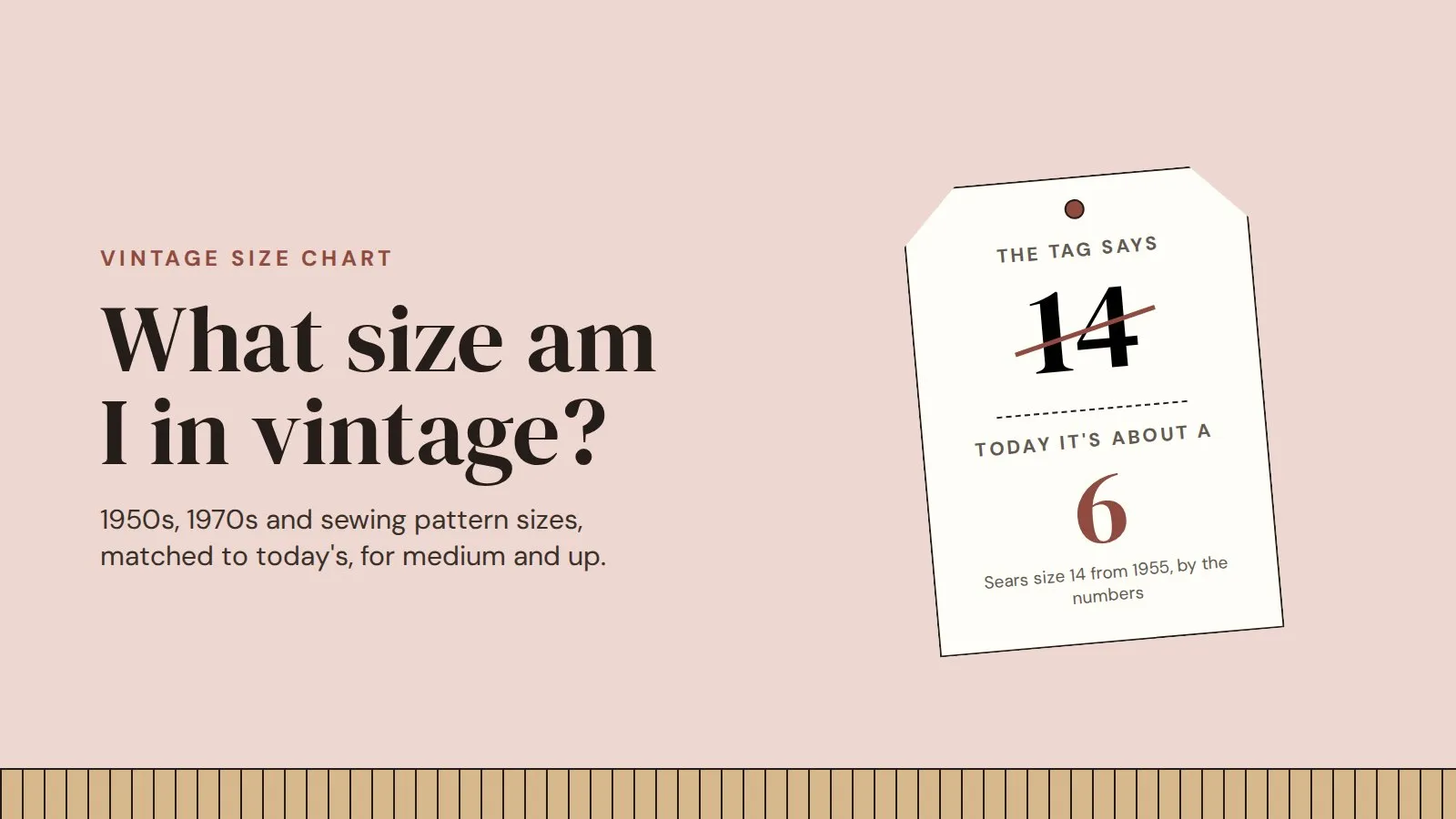
What size am I in vintage? A conversion chart for medium and up
Vintage sizes run small. A chart matching 1950s, 1970s and sewing pattern sizes to today's, plus how to check fit with a tape measure.
Affiliate links: Links on this page are affiliate links. If you buy through them, we may earn a commission at no extra cost to you. How we make money.
Let me guess. You found a dress you loved, flipped the tag, saw a size 16 or 18, and thought, “Oh good, that’s me.” Then it wouldn’t zip past your ribs.
That was me for years. And it isn’t you. Vintage sizes just don’t mean what today’s sizes mean, and nobody tells you that until you’re stuck in a dressing room.
So here’s the short answer, then the chart, then the part that actually matters: how to know for sure.
Why the numbers changed
There was never one size chart that every brand had to follow. The U.S. government published voluntary sizing standards in 1958 (CS 215-58) and again in 1970 (PS 42-70), but brands could ignore them, and many did.
Over time, the number on the label kept getting smaller for the same body. People call this vanity sizing. Here’s the example that shows it best, from a 2011 New York Times report: in Sears’ 1937 catalog, a size 14 dress had a 32-inch bust. By 1967, a 32-inch bust was a size 8. By 2011, it was a size 0.
Same body. Three completely different numbers.
The vintage size conversion chart
These charts start at the sizes most of us over a medium are actually looking for. All measurements are body measurements in inches (the person the clothes were made for, not the garment itself).
The last two columns are my best match to today’s sizes. I lined each row up against the ASTM D5585 misses chart, which a lot of U.S. brands use as their starting point, and ModCloth’s size chart for letter sizes. Use them as a starting point, not a promise.
1950s store-bought sizes
From the 1955 Sears catalog, as reprinted by Chronically Vintage.
| Size on the tag | Bust | Waist | Hips | About today | Letter size |
|---|---|---|---|---|---|
| 14 | 35½ | 27 | 38 | 6 | M |
| 16 | 37 | 28½ | 40 | 10 | L |
| 18 | 39 | 30½ | 42 | 12 | L to XL |
| 20 | 41 | 32½ | 44 | 14 | XL |
Chronically Vintage puts a 1950s size 18 at about a modern 8 or 10, even smaller than my match. That’s because many brands today cut more generously than the standard chart. Either way, the takeaway is the same: the 1950s number is way bigger than the size you’d be.
1970s store-bought sizes
From the 1970 government standard, PS 42-70.
| Size on the tag | Bust | Waist | Hips | About today | Letter size |
|---|---|---|---|---|---|
| 16 | 38 | 29 | 40 | 10 | L |
| 18 | 40 | 31 | 42 | 12 to 14 | XL |
| 20 | 42 | 33 | 44 | 14 to 16 | XL |
| 22 | 44 | 35 | 46 | 16 to 18 | 1X |
Sewing patterns from 1967 on
If you sew, or you’re buying something someone made from a pattern, these numbers matter. The big pattern companies revised their sizes in November 1967, and today’s Simplicity Misses charts still use the same bust and hip numbers (the waists are about an inch bigger now). The “Women’s” sizes are the larger range. Newer patterns label that range 18W to 32W instead.
| Pattern size | Bust | Waist | Hips | Letter size |
|---|---|---|---|---|
| Misses 14 | 36 | 27 | 38 | M |
| Misses 16 | 38 | 29 | 40 | L |
| Misses 18 | 40 | 31 | 42 | L to XL |
| Women’s 40 | 44 | 36 | 46 | 1X |
| Women’s 42 | 46 | 38 | 48 | 2X |
| Women’s 44 | 48 | 40½ | 50 | 2X |
| Women’s 46 | 50 | 43 | 52 | 3X |
| Women’s 50 | 54 | 48 | 56 | 4X |
How to know it’ll actually fit
The chart gets you close. A tape measure gets you sure. Here’s what I do every single time:
- Measure yourself once. Bust at the fullest part, natural waist at the narrowest part, hips at the fullest part. Write them down. The Fit Decoder walks you through it and saves your numbers on your phone.
- Get the garment’s numbers. Ask the seller to lay it flat and measure straight across the bust, waist and hips, then double each one. A good seller will. If they won’t, that tells you something.
- Compare, and leave some room. For a fitted dress with no stretch, look for about 3 to 4 inches more than your bust. That’s the “fitted” ease on the Vogue, Butterick and McCall’s ease chart. For a looser style, 5 inches or more.
- Check the shoulders on jackets. 1980s pieces especially have heavily padded shoulders, and shoulders are the hardest thing to alter.
If the waist is within an inch or two of yours on a non-stretch dress, it’s going to be snug. If it’s smaller than your waist, it’s a pass, no matter how pretty it is. I know. I’ve been there.
Or skip the math
Sometimes you want the look without the measuring tape and the hunt. That’s what vintage-inspired pieces are for: new clothes cut in the old shapes, sized on today’s charts, and usually made well past XL.
 Sample product
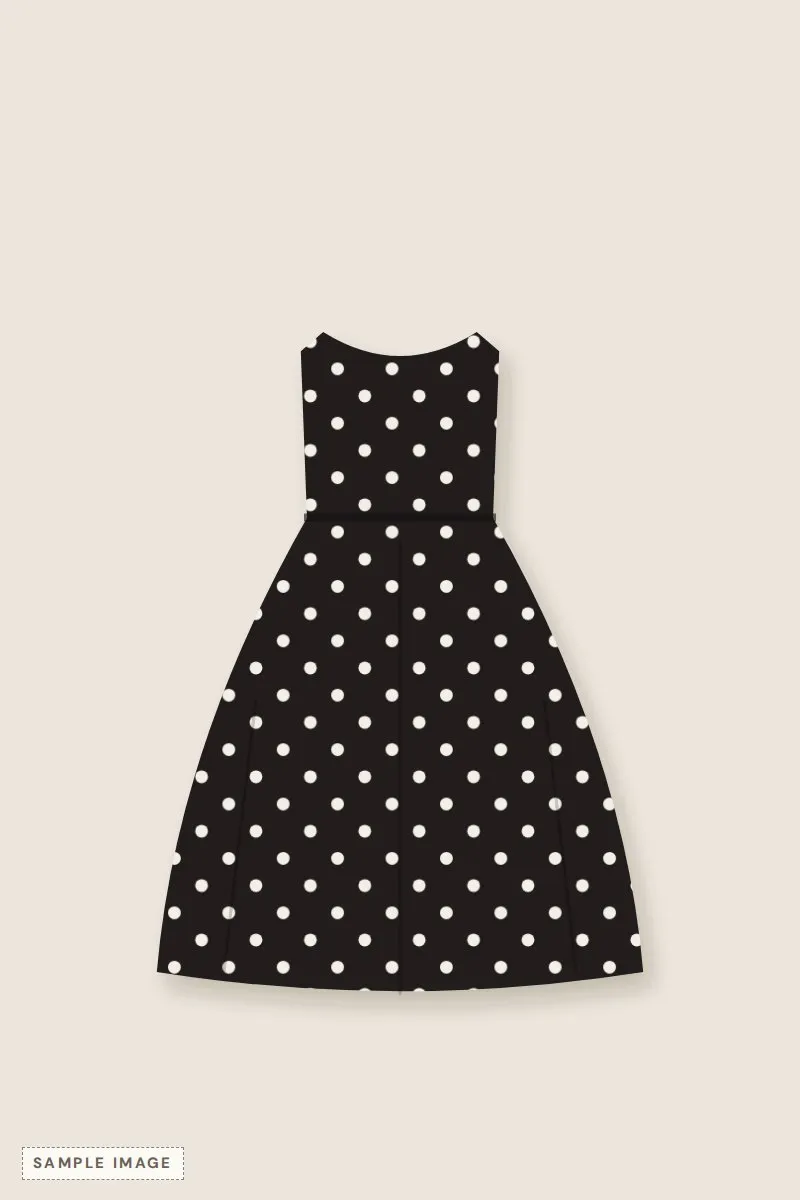
Polka Dot Swing Dress
Sizes S–4XL
Full skirt, real pockets, and enough structure through the bodice.
Fit: No stretch in the bodice. Between sizes? Go up.
Shop at Retro Stage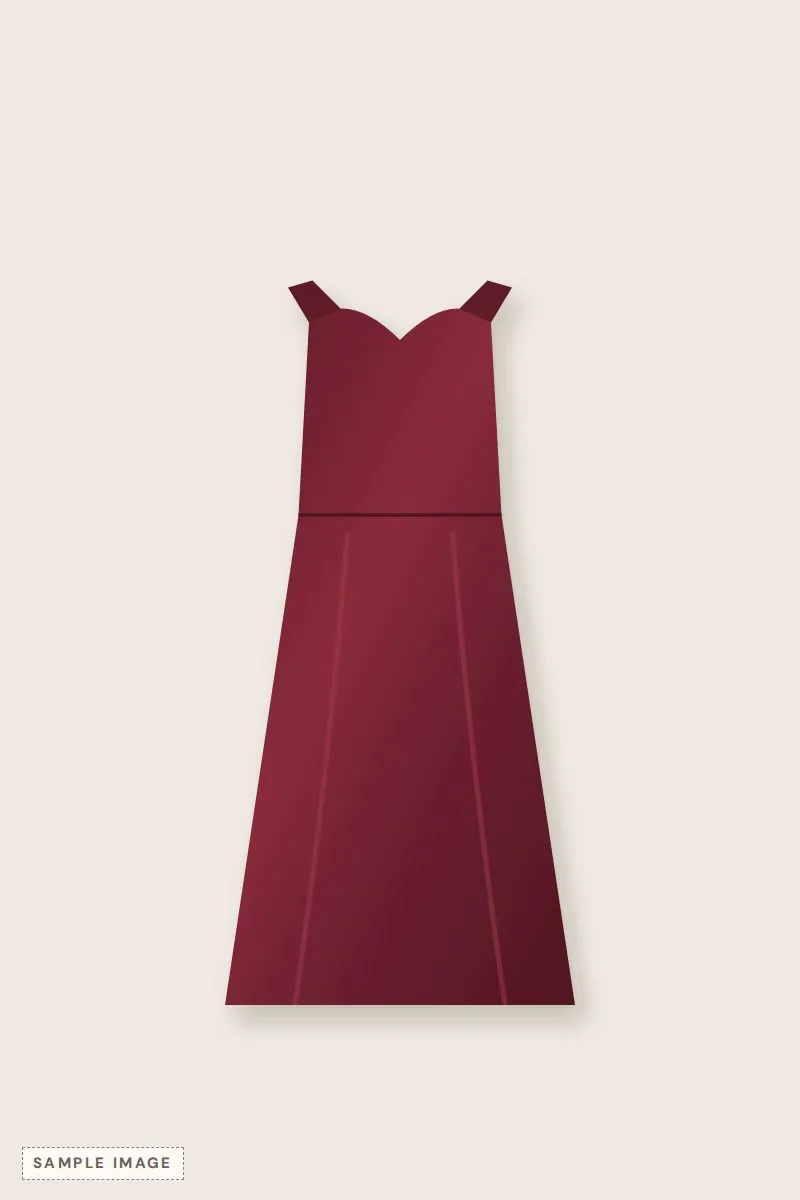 Sample product
Velvet Sweetheart Midi Dress
Sizes XS–5X
Stretch velvet and a sweetheart neckline. Dressed up, with give.
Fit: Stretchy. Most people take their usual size.
Shop at Unique Vintage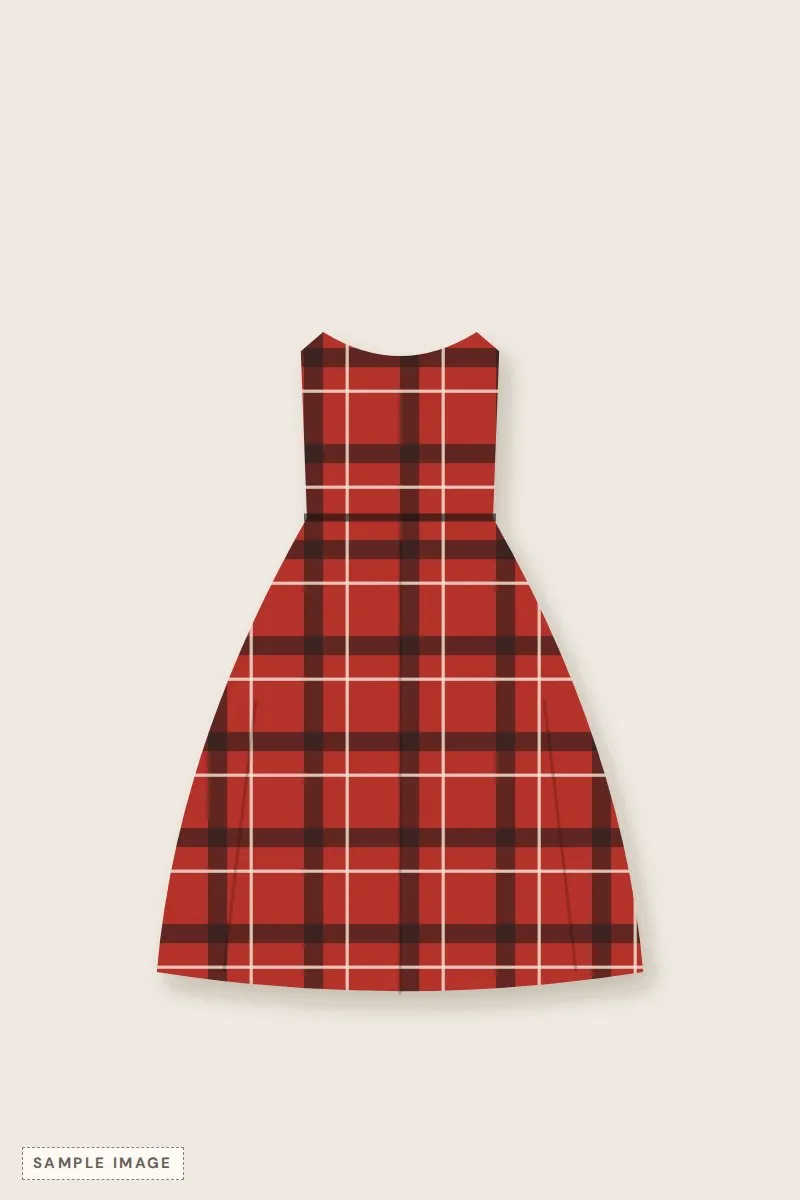 Sample product
Tartan Swing Dress
Sizes XS–5X
Classic plaid with enough stretch for a long evening.
Shop at Unique VintageIf you save your numbers in the Fit Decoder, each one of these shows whether you’re inside its size range before you click.
And if you want all of this on one page you can keep on your phone or print, grab the free Fit Guide. It has the measuring steps, the size history and a fill-in worksheet for your own numbers.
Happy hunting,
Paige
Sources: 1955 Sears sizes via Chronically Vintage. PS 42-70 and ASTM D5585 via U.S. standard clothing size. Sears 1937 to 2011 example via Vanity sizing, citing the New York Times (Stephanie Clifford, April 24, 2011). 1967 pattern sizes from the University of Minnesota Extension folder Figure Types and Sizes (1968). Current pattern chart from Simplicity. Letter sizes from ModCloth. Ease chart via WeaverDee. 1950s shapewear from Vintage Dancer. 1980s shoulders from the FIT Fashion History Timeline.
Quick answers
Do vintage clothes run small?
Yes, usually by several sizes. Labels have crept smaller over the decades for the same body. A size 14 in the 1955 Sears catalog was made for a 35½-inch bust, which is closer to a size 6 on today's standard chart.
What is a vintage size 16 in today's sizes?
A 1950s size 16 from the Sears catalog was made for a 37-inch bust, 28½-inch waist and 40-inch hips, which lines up with about a size 10 today, or a Large in letter sizes. Always check the garment's own measurements, because every maker sized a little differently.
Should I just size up when I buy vintage?
Sizing up by the tag is a guess. Measure your bust, waist and hips, then look for a garment that's about 3 to 4 inches bigger than you at the bust for a fitted dress. That's the ease the big sewing pattern companies build into a fitted style.
Do vintage sewing patterns use the same sizes as store-bought clothes?
No. The big pattern companies revised their sizes in November 1967, and today's Misses pattern sizes still use that same bust and hip chart. Today's pattern size 14 is made for a 36-inch bust, which is about a size 6 or 8 in ready-to-wear today.